
Shaping the Prow House
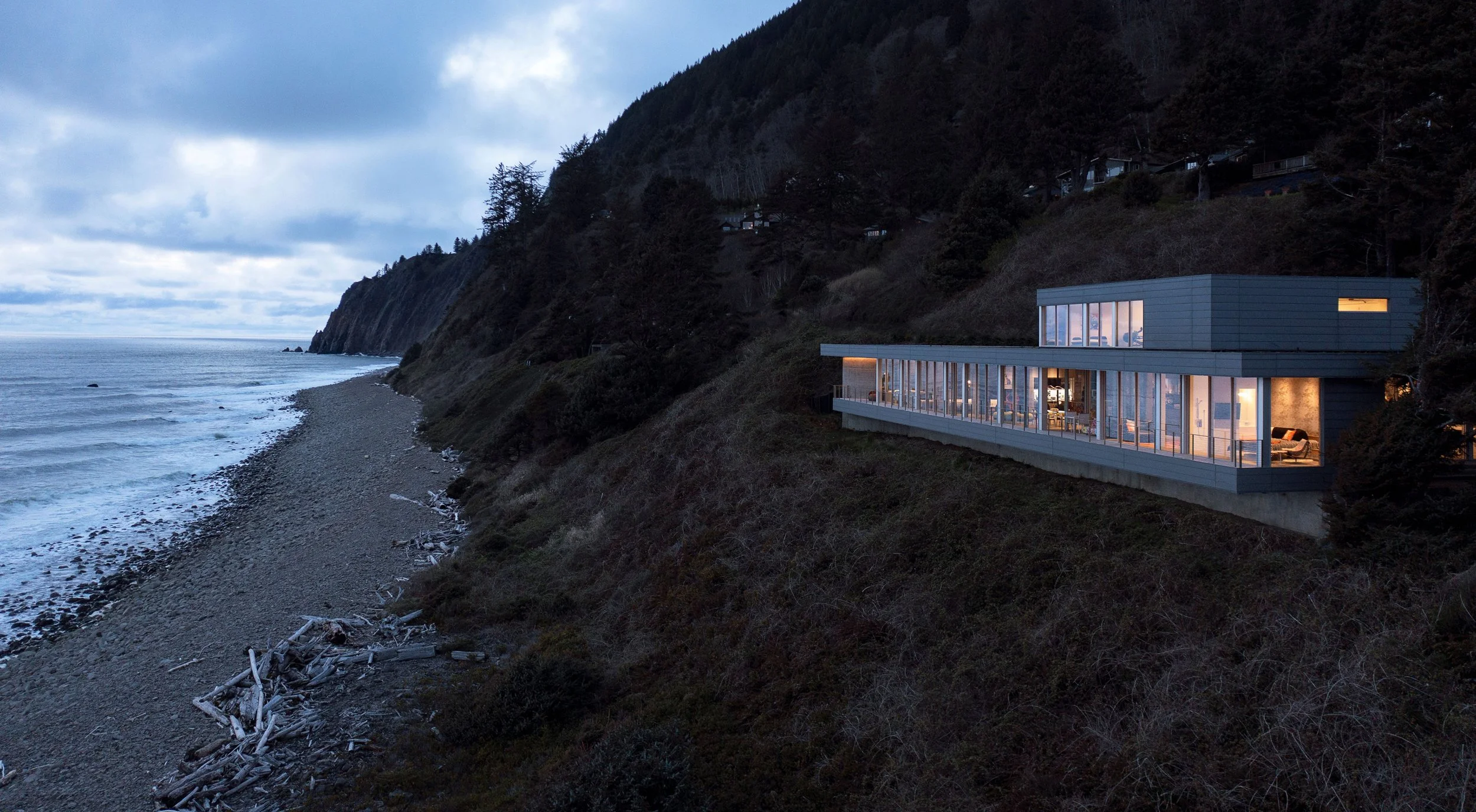
Prow House, perched above the ocean and tucked into the hillside, proved a challenge to bring to life.
“Good architecture disappears into the background—blending into the landscape and how people live.” – chadbourne + doss
From “Unbuildable” to Unmistakable
Sunset magazine recently recognized our Prow House with the 2026 Sunset Home & Design Award for Best Waterfront Modern. Amazingly, what has become an iconic residence almost didn’t happen. With this recent award, we’re taking the opportunity to examine this project as a case study and explore how persistence and creative problem-solving brought Prow House to life.
For years, its lot sat empty and passed over for good reason. The lot drops steeply toward the ocean, pinches into a sharp point, and comes with tight rules about how much you can build and how tall you can go. Add a group of closely watching neighbors, and it’s the kind of site from which most people walk away. We didn’t. Where others saw a dead end, we and our clients saw the opportunity to live in this special place as a puzzle worth solving.
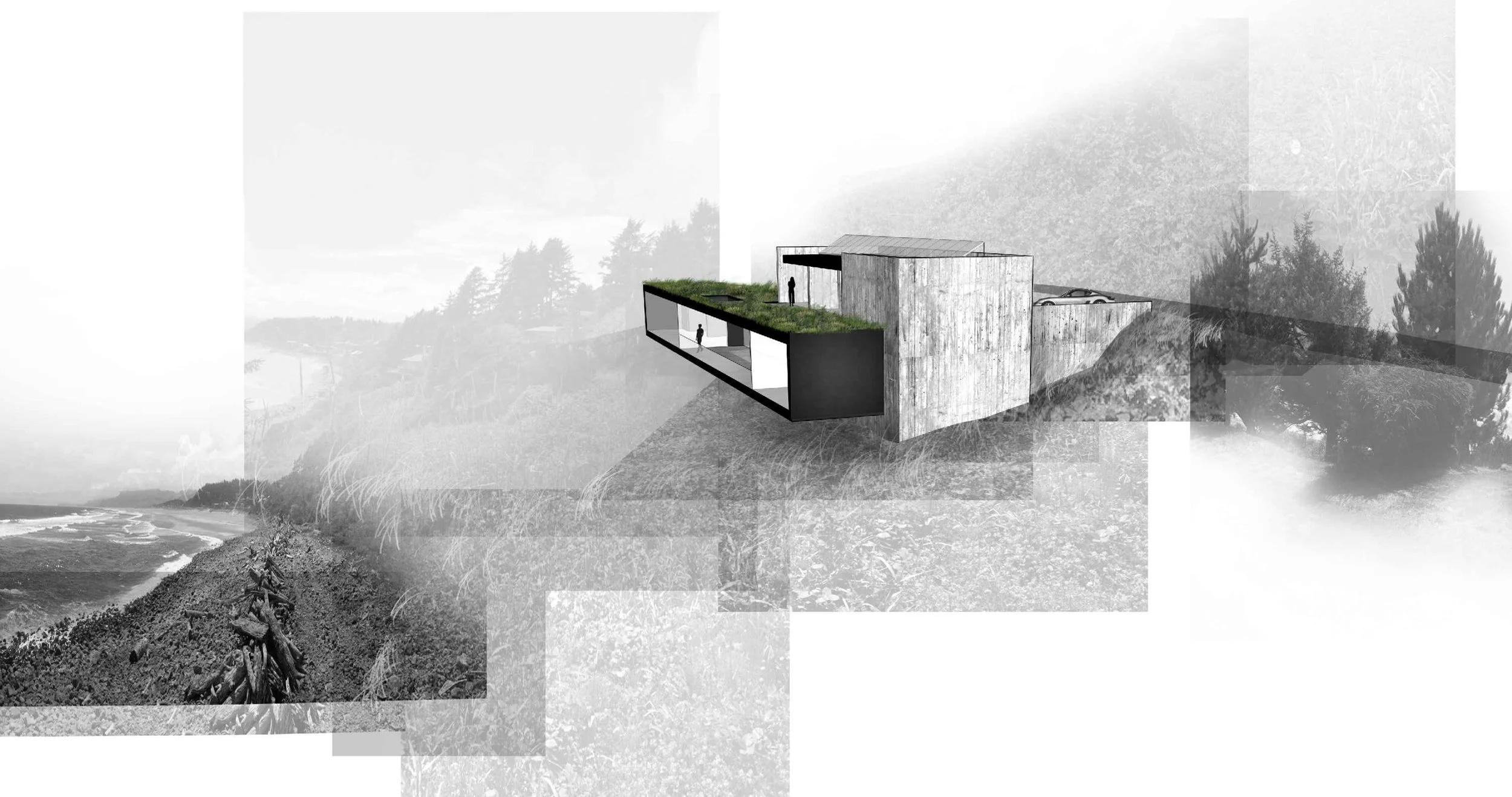
Architectural drawings mapping what’s possible.
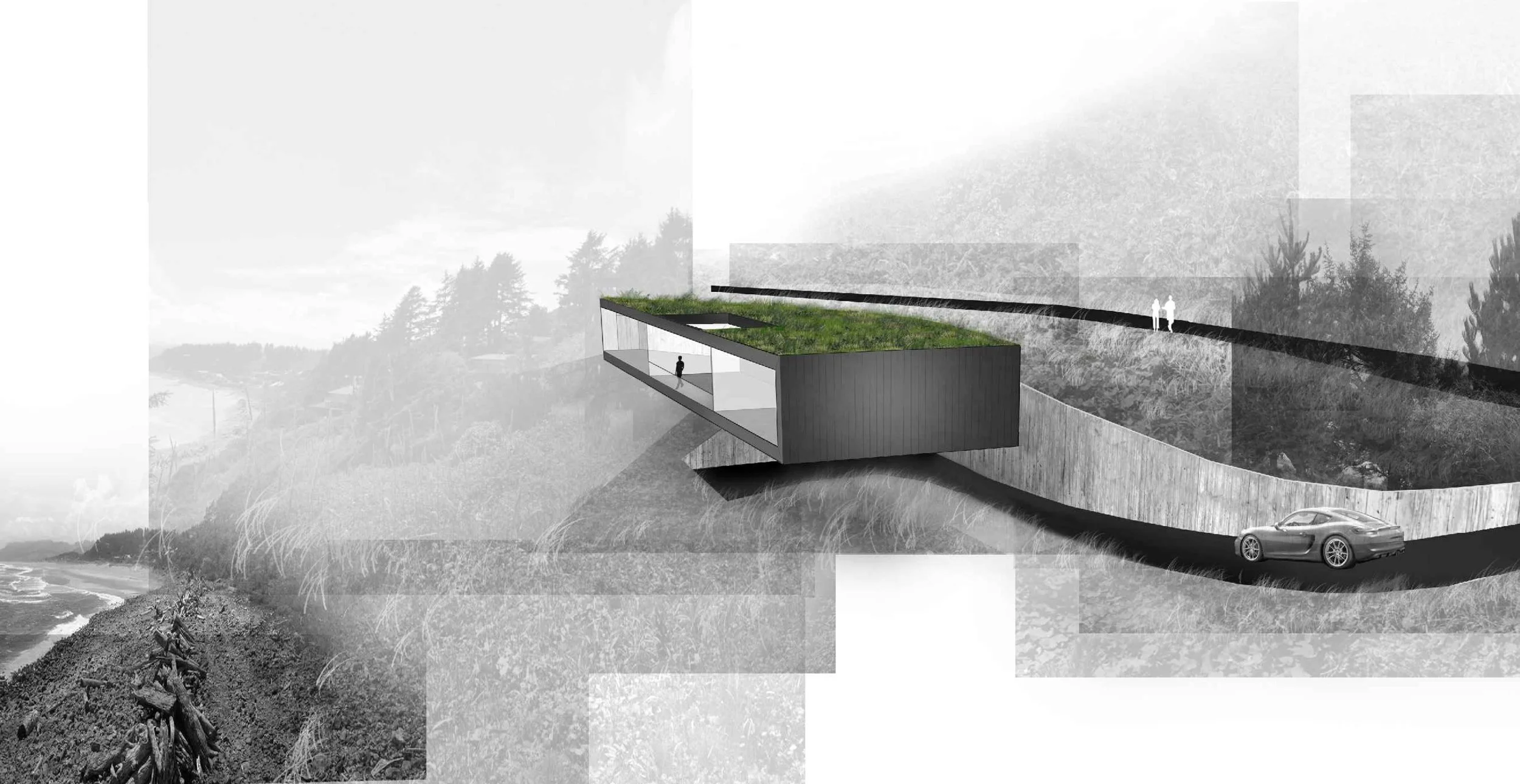
Envisioning a subterranean garage.
Finding a Way In
Every project starts with possibility, and here that meant asking a simple question: What could this site actually support? We mapped the slope, studied the zoning, and tested different approaches. Then we started making a case for the project, working with the city and neighbors to secure two key variances: a slightly reduced front setback and a modest increase in height. Small moves on paper, but together they unlocked the design and made the house possible.

Three iterations of initial design.
From there, the design became an exercise in careful placement. Instead of sitting on top of the hill, the house tucks into it. This keeps the profile low from the street and reduces the amount of structural support needed for the dramatic 11-foot cantilever toward the ocean. It’s a balance of restraint and ambition.
A green roof helps the home blend into the hillside, softening its presence and preserving views for neighbors. What could have been an imposition becomes a quieter, softer gesture.
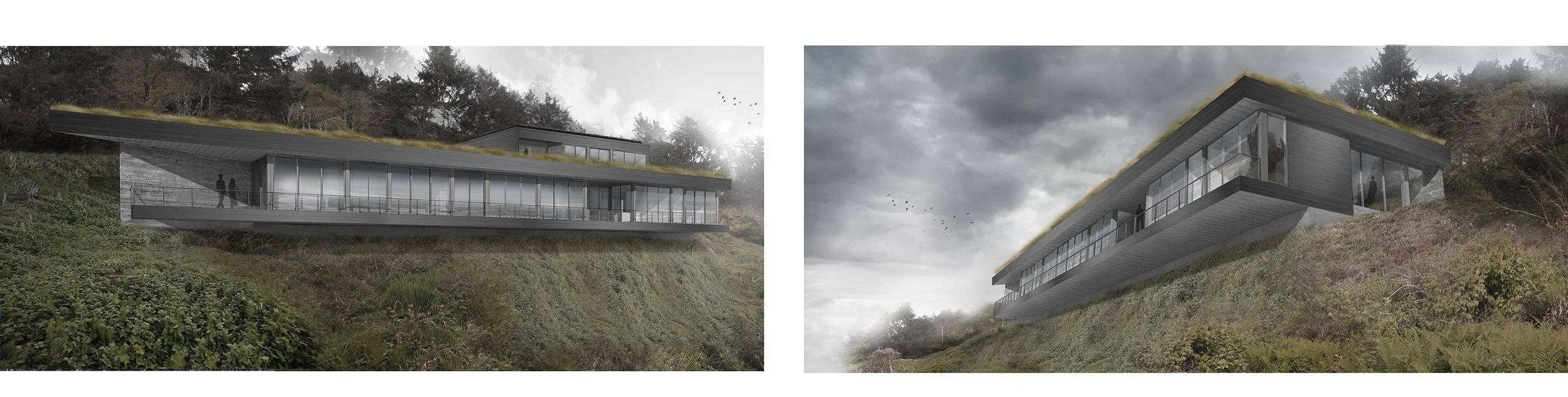
Final design with added green roof.
The lot’s unusual shape—narrow and pointed—ended up driving the design. Rather than fight it, we exaggerated it. The house tapers to a knife-edge like the prow of a ship. It’s a direct response to the constraints, and it gives the home its identity.
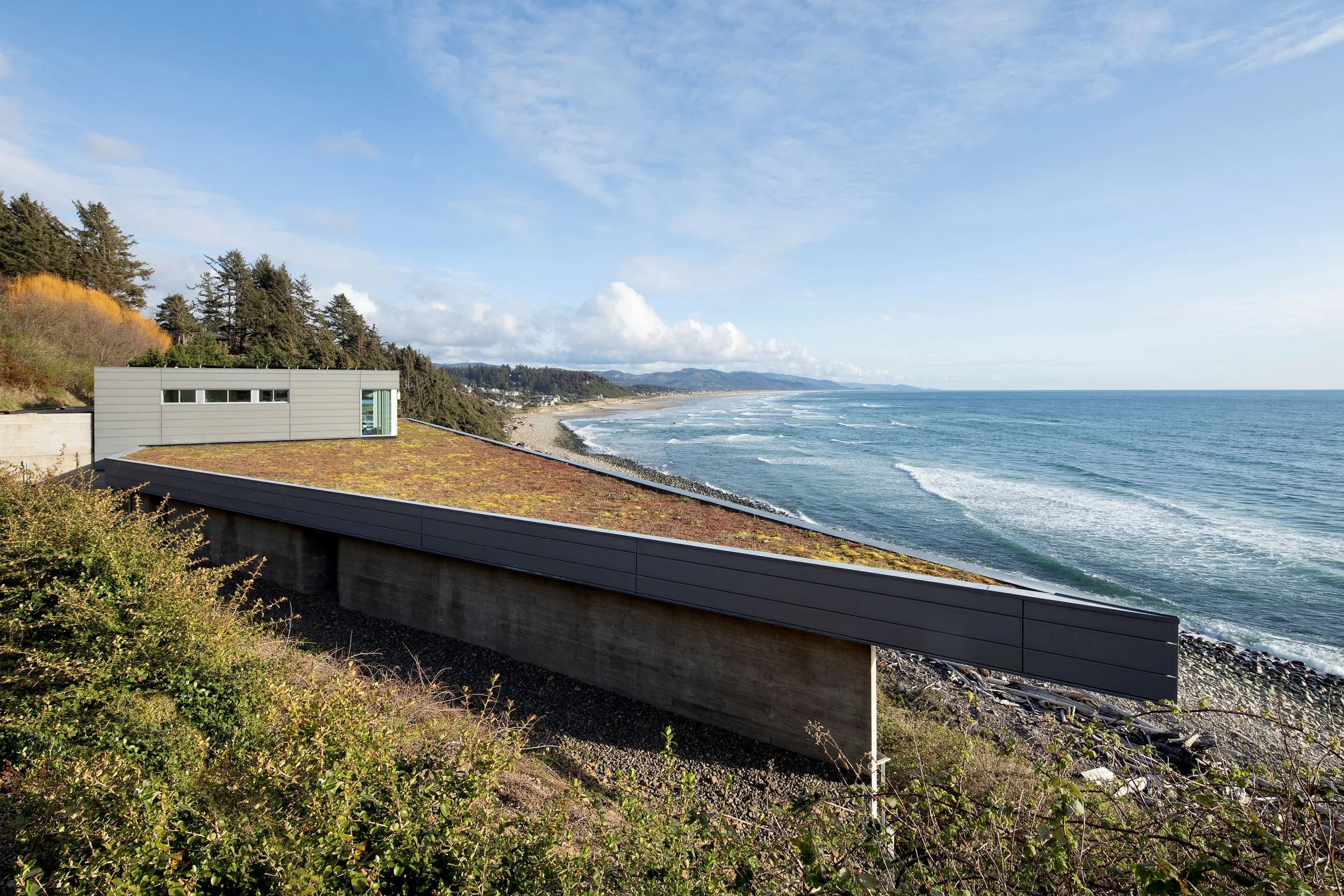
The knife-sharp prow shape.
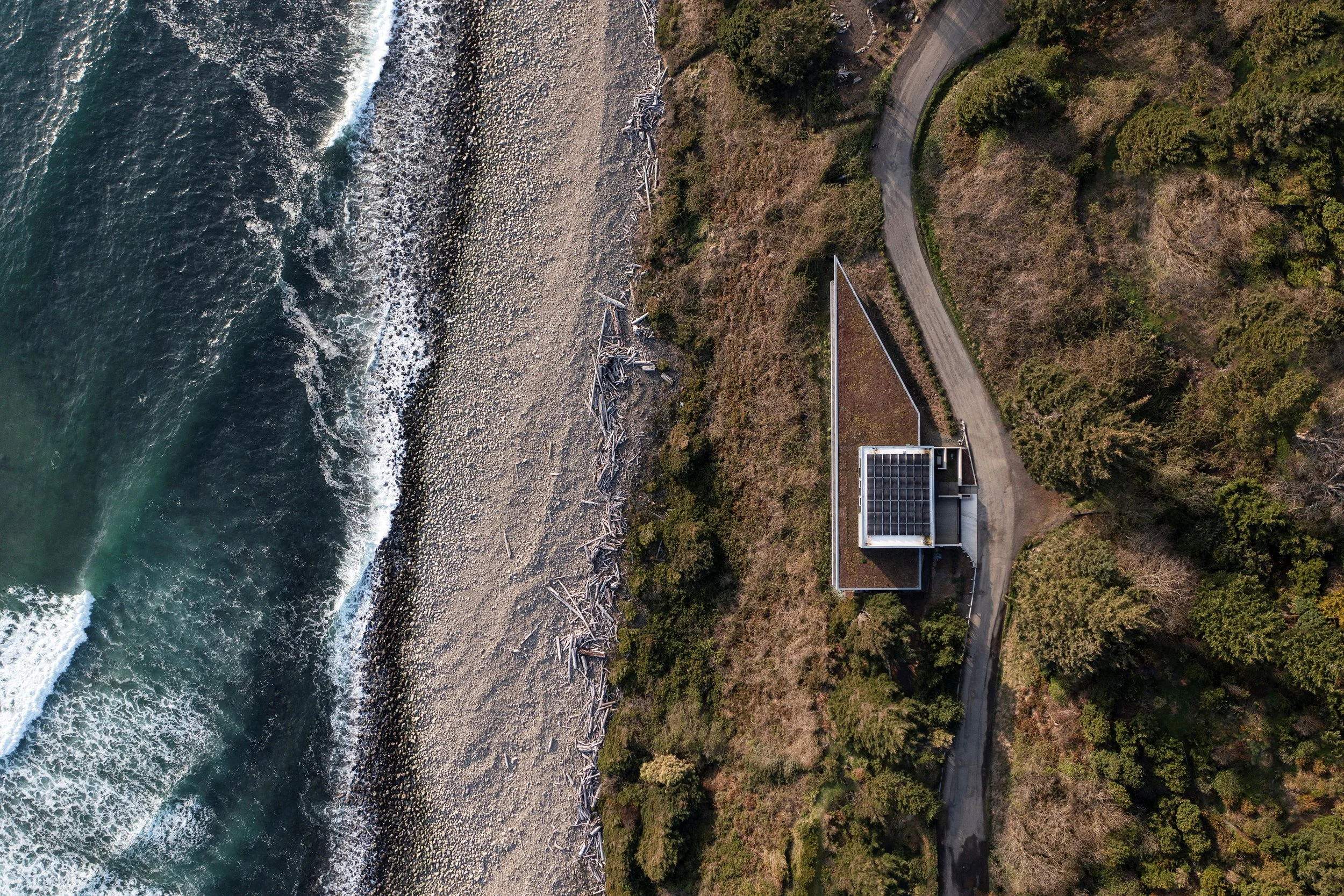
From above, the shapes and colors are visible.
Living With the View
You arrive from above, entering through the upper level before moving down a glass stair into the main living spaces. And then the house opens up. A continuous wall of glass frames the horizon, dissolving the boundary between inside and out. Light shifts, weather rolls in, and the Pacific becomes part of your daily life.
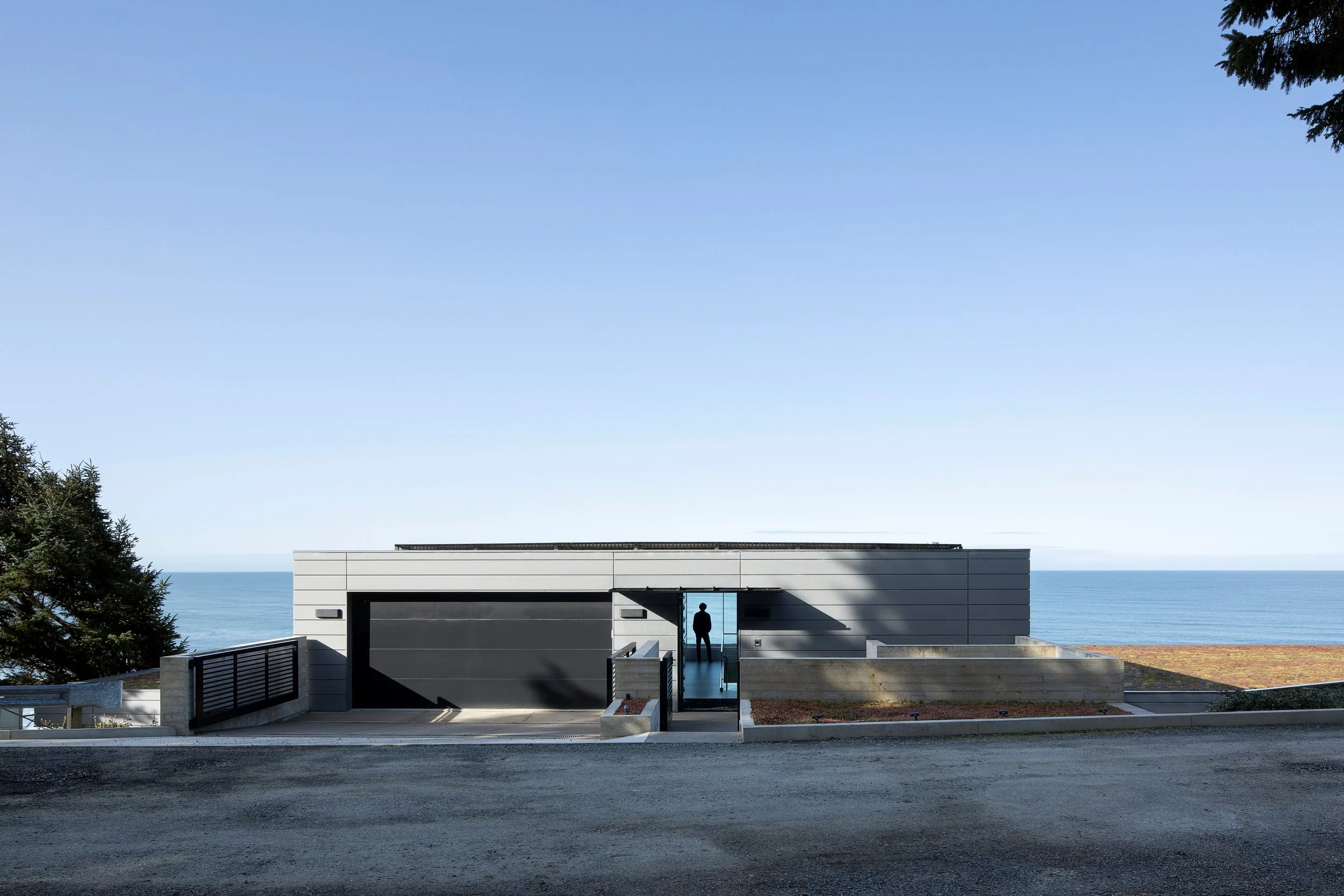
Entry, guest suite, and garage are on the upper level.
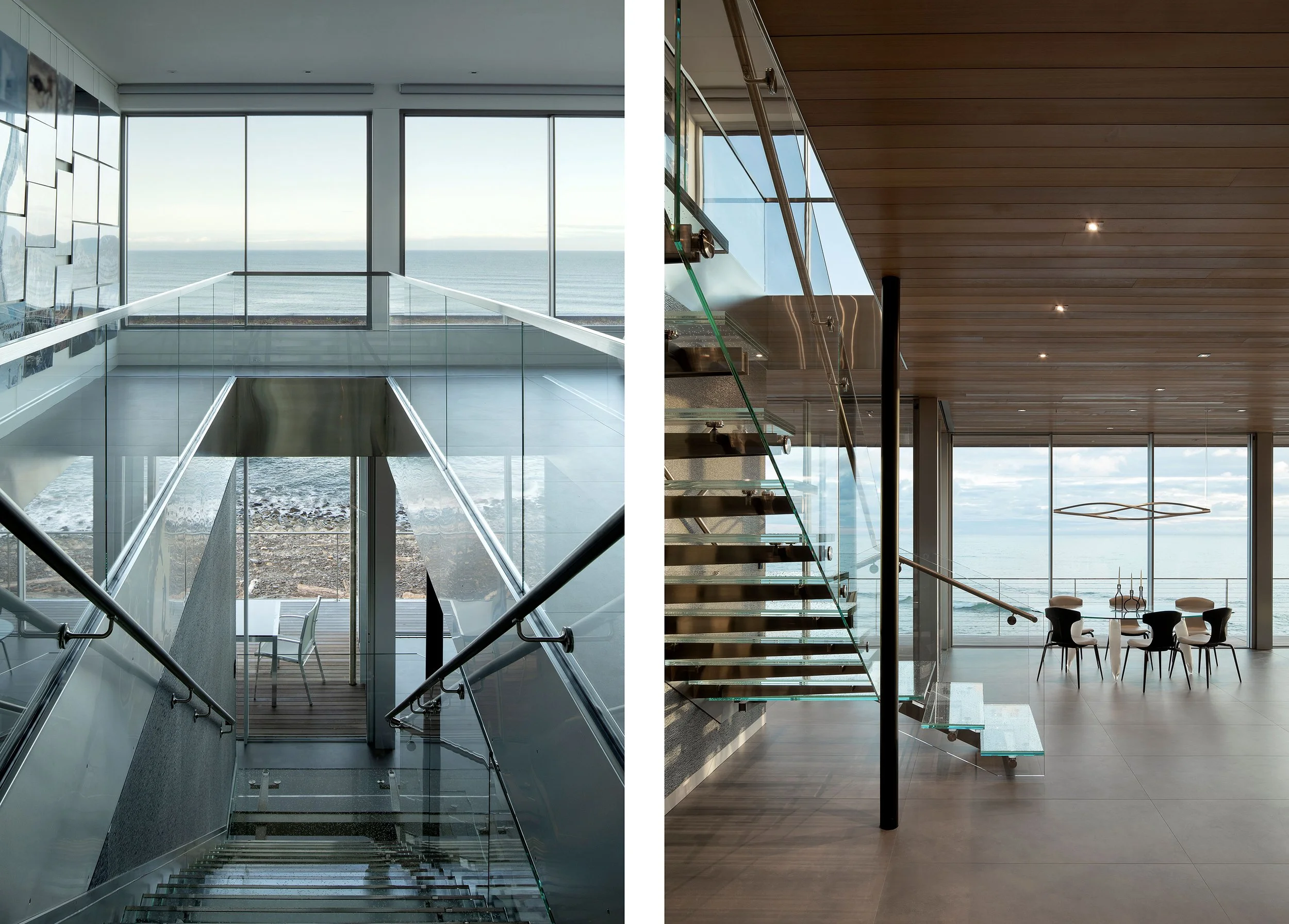
Descending the glass staircase from the upper level. Lower level with expansive views of the Pacific.
The layout is simple and intentional: all the primary rooms face the ocean, while the more functional spaces tuck into the hillside at the back. It’s a plan shaped entirely by the site.
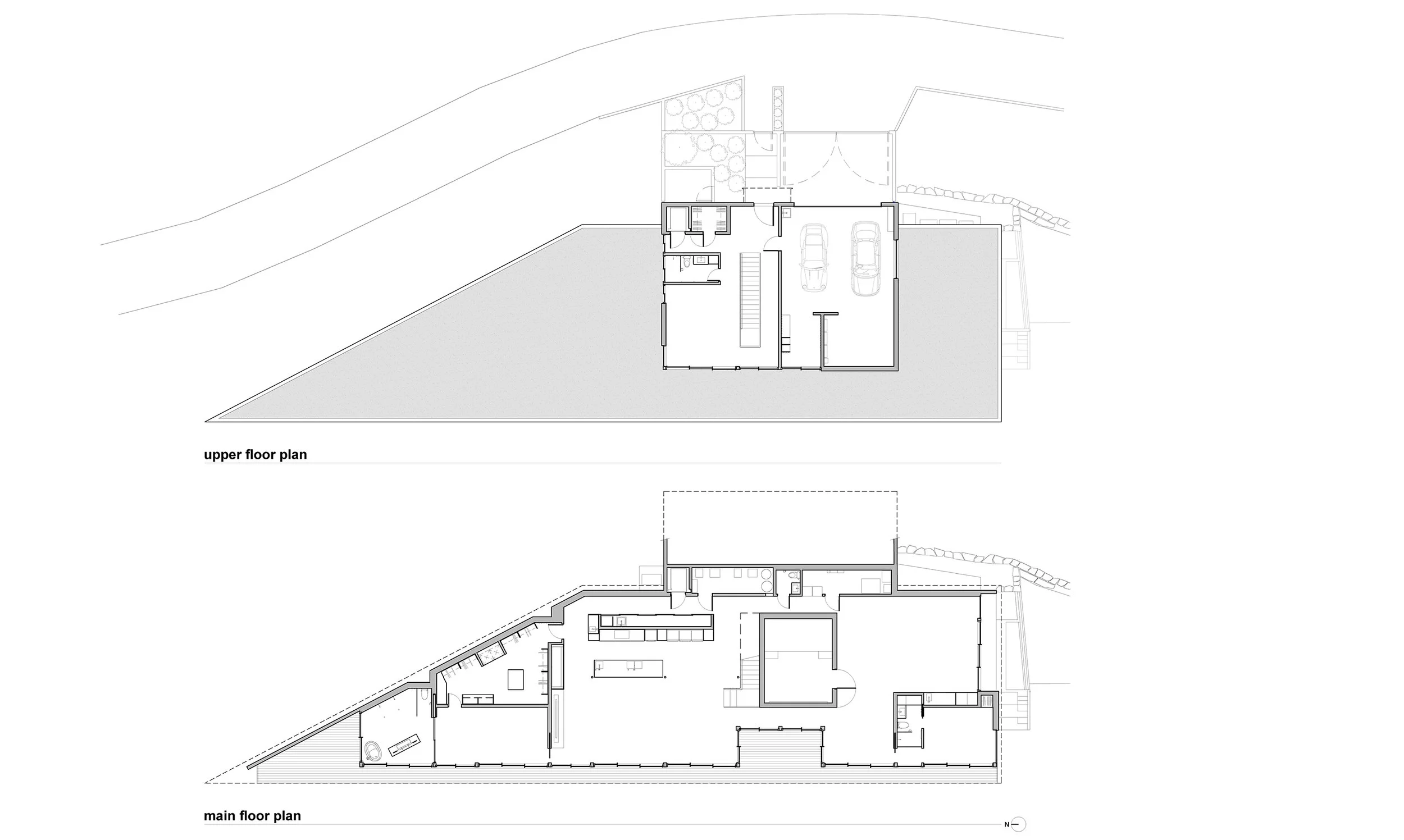
Layout and floor plan.
Built for the Coast
Out here, materials matter. Salty air, strong winds, and dynamic weather demand durability, so the palette is tough but understated: zinc, stainless steel, concrete, aluminum, glass, and cedar. The colors pull from the landscape—driftwood, grasses, stone, and the soft grays of the sky and sea—so the house feels at home in its setting.
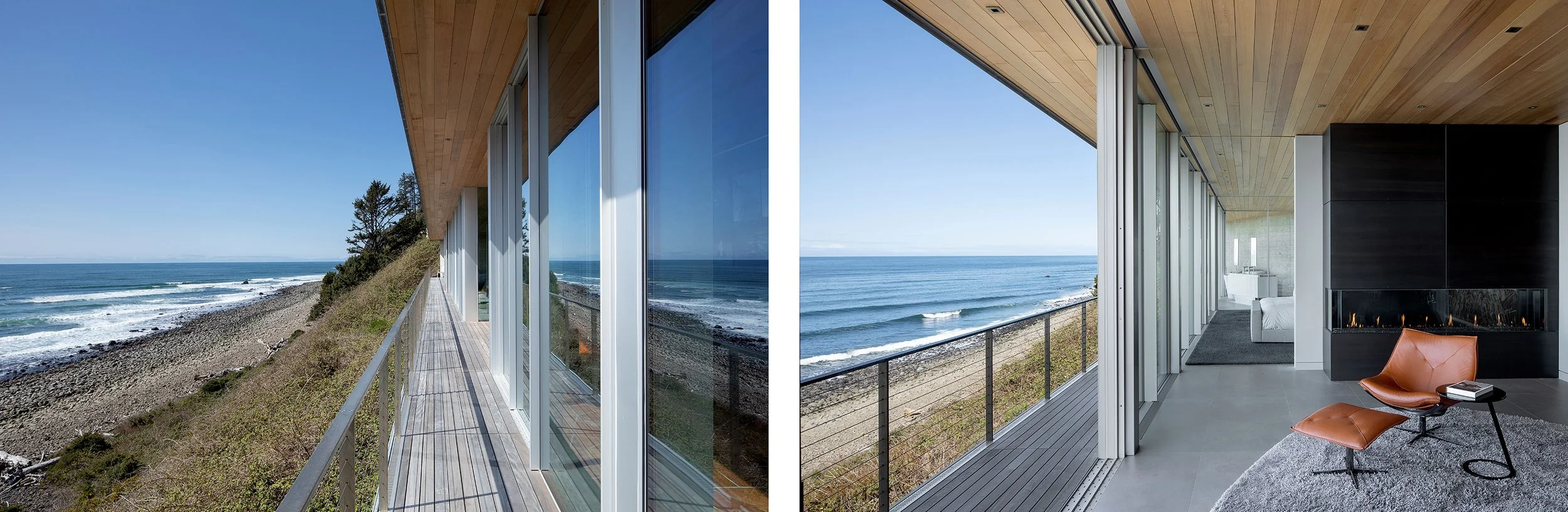
Exterior windows and deck. Floor-to-ceiling windows open for indoor-outdoor living.
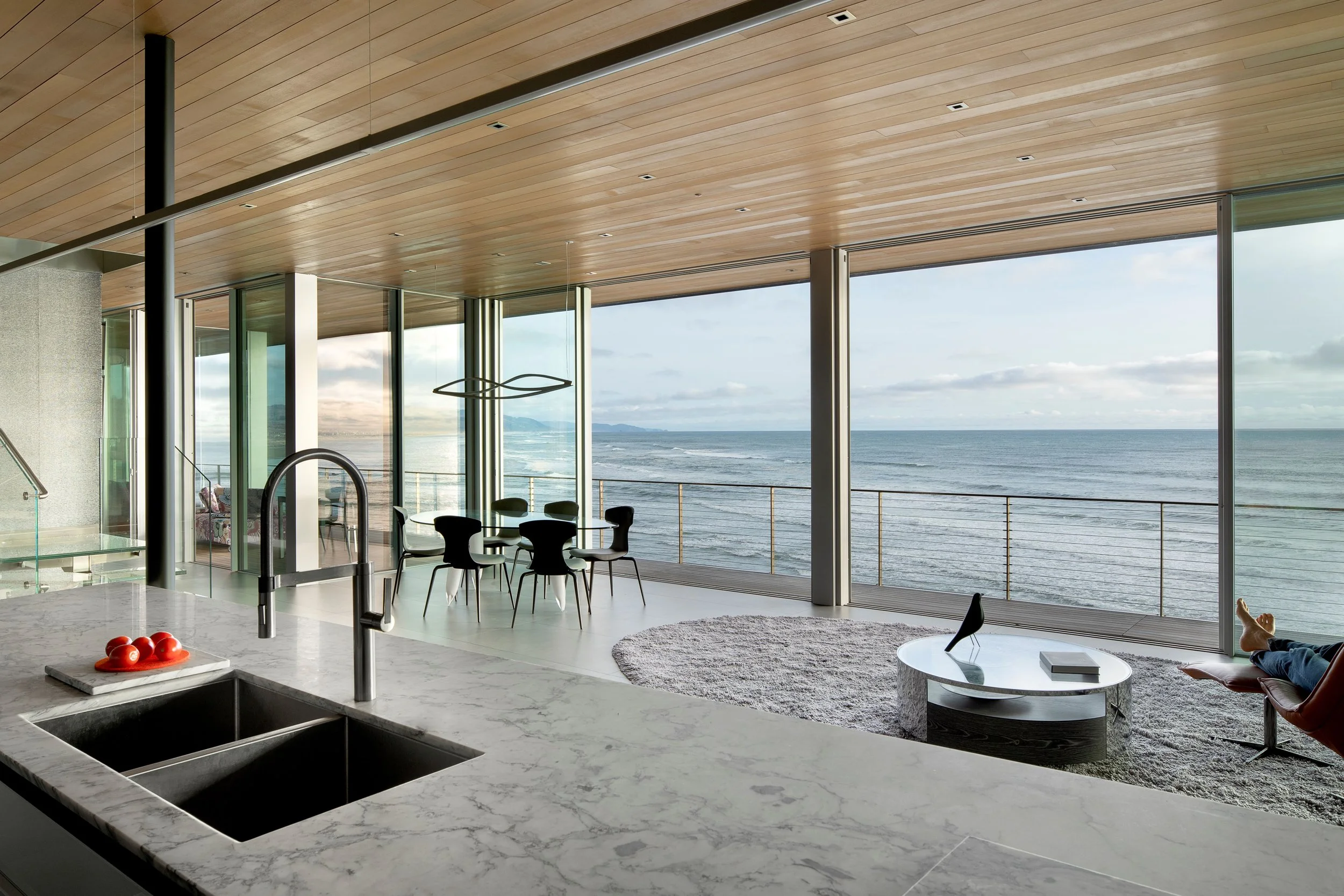
With the windows fully open, the Pacific appears to drift under the house.
High Performance Design for Real Life Comfort
Sustainability was built in from the start, not added on later. The home is designed to outperform standard energy codes, with a tightly insulated envelope, an efficient all-electric heat pump mechanical system, and a 18.5 kW photovoltaic solar array that helps offset daily energy use. Materials were chosen for durability and meant to age gracefully rather than require constant upkeep, supporting a century-long lifespan and reducing waste. The green roof serves multiple functions, including adding insulation to stabilize indoor temperatures, absorbing and slowing stormwater runoff, and adding natural habitat. On the sunniest exposures, automated exterior shading responds to changing light, reducing heat gain and keeping interiors comfortable without over-relying on mechanical cooling. The result is a home that feels as good as it performs: comfortable year-round, resilient in a coastal climate, and thoughtfully designed to keep long-term operating and maintenance costs in check.
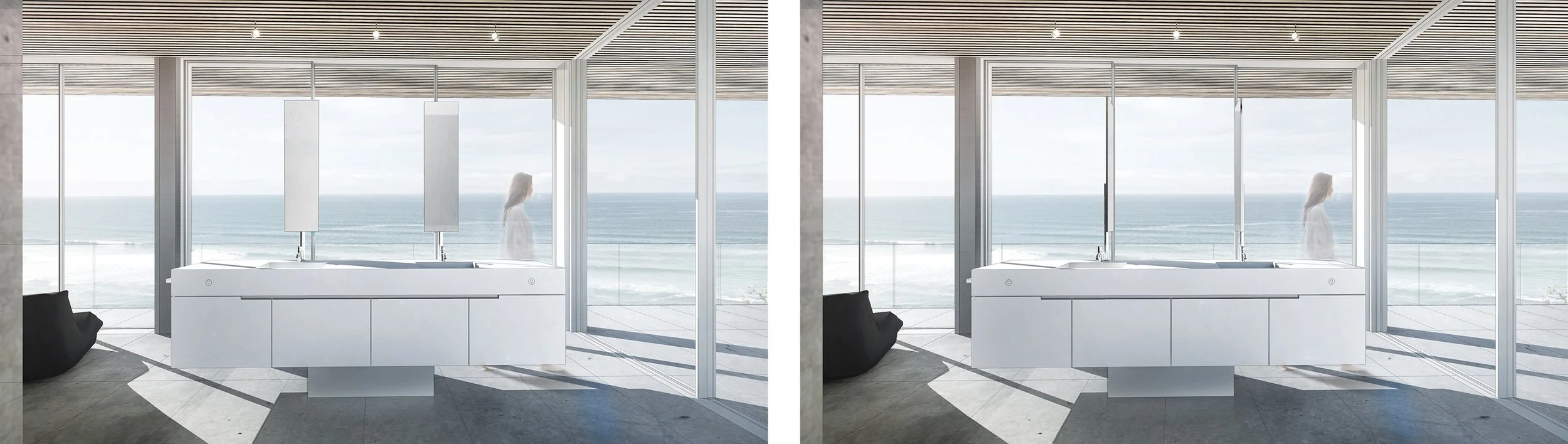
Drawing with rotating vanity mirrors.
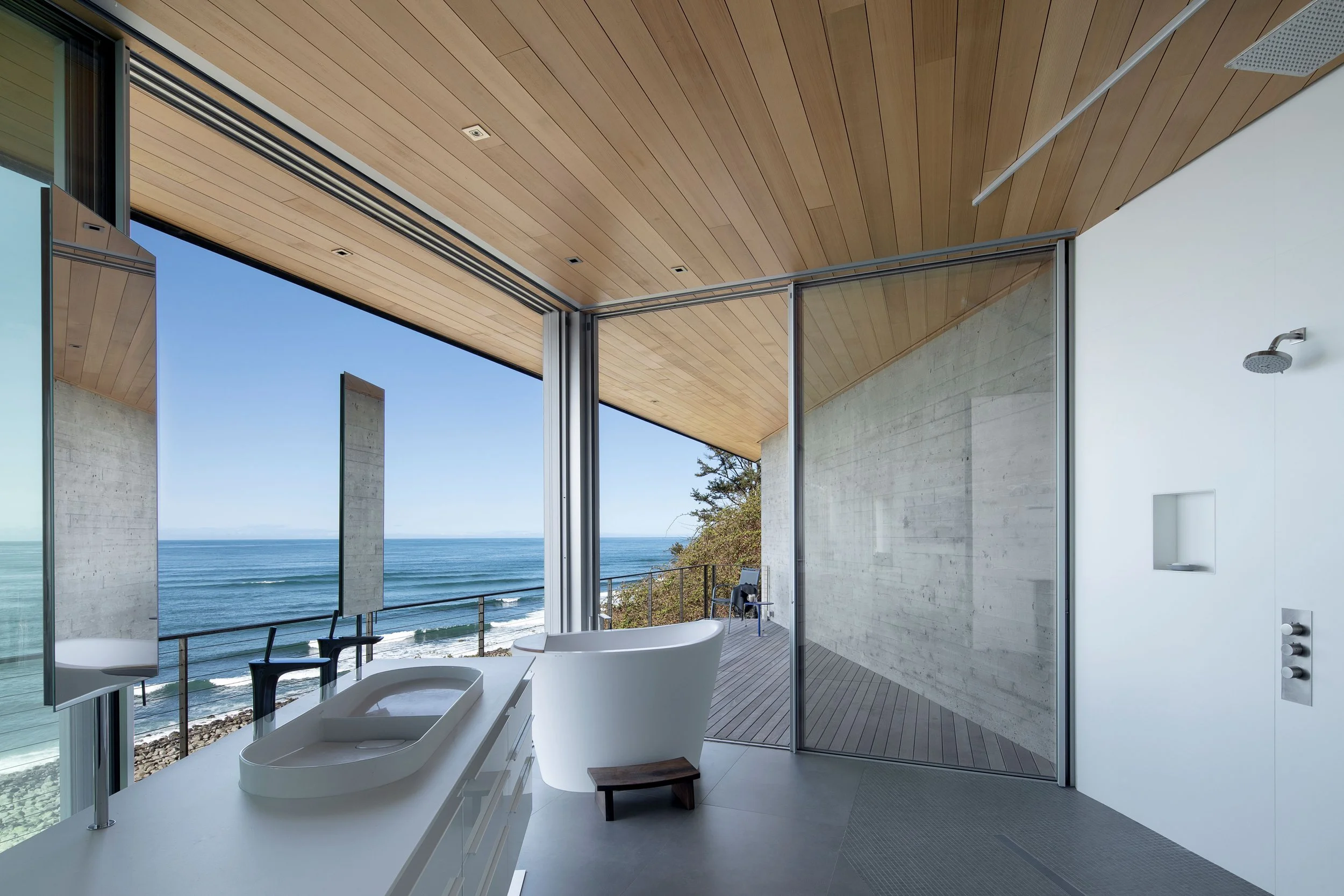
The vanity and mirrors brought to life.
A Unique Solution
We begin by paying close attention—understanding both the people we’re designing for and the conditions of the site. From there, ideas are tested, challenged, and refined through a hands-on, highly visual process. Working in 3D helps us quickly evaluate options and bring clients into the conversation in a meaningful way, so decisions are informed, collaborative, and grounded in real experience.
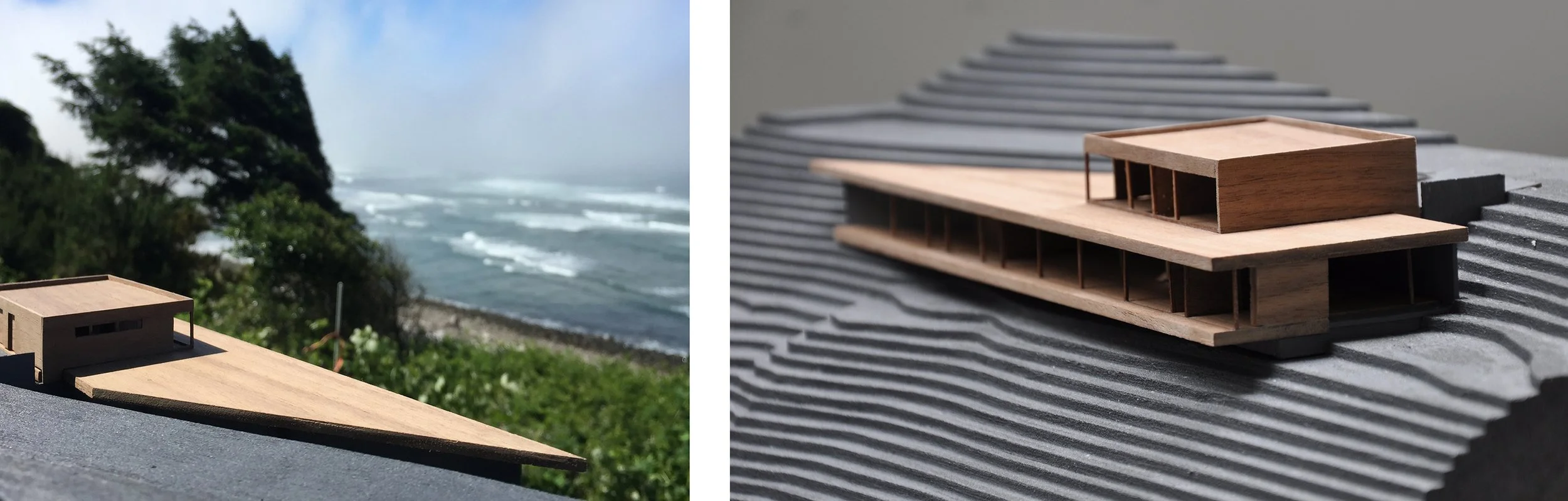
3D Models depicting the structure and site.
At its core, the Prow House is a response to complexity. Steep terrain, tight zoning, neighboring homes, and an unforgiving coastal climate all shaped the outcome. Rather than obstacles, these factors became the framework for the design, guiding choices and sharpening the architecture into something specific to this place and these clients.
What was once considered “unbuildable” now feels inevitable. The house is bold yet restrained, shaped by its challenges and deeply connected to the landscape. It stands as a reminder that thoughtful, persistent design can turn even the toughest sites into something remarkable.
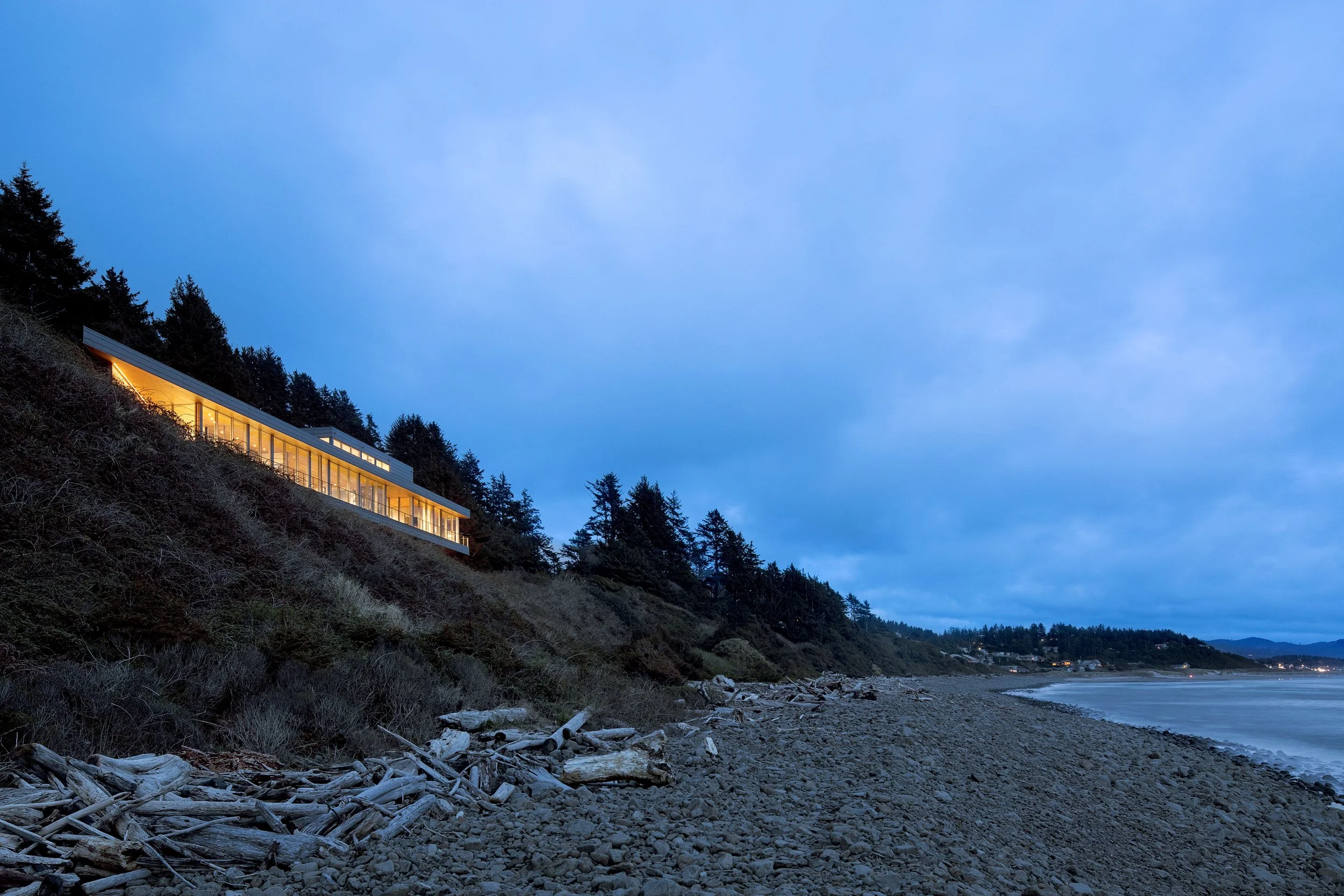
The Prow House, sitting above the beach.